Tenant income certification: how to complete the TIC and check the documents behind it
For compliance specialists and property managers who complete TICs at move-in and recertification. See what each part of the form needs, how to annualize a pay stub, and which rules change by program and state.

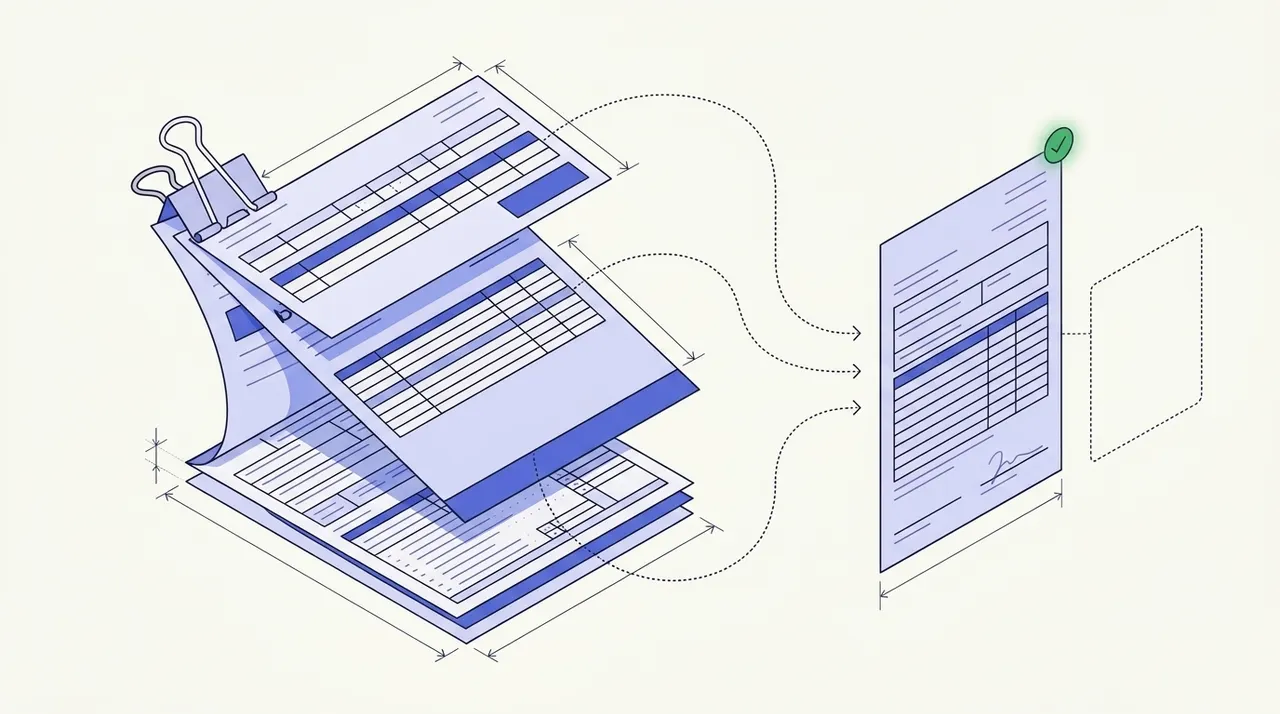
Key takeaways
- A tenant income certification (TIC) adds up a household's income and shows it is within the limit for a tax credit unit. Every adult in the household signs it, and then the owner's representative signs.
- Annual income on a TIC is the gross income the household expects in the 12 months after the effective date. Pay that arrives every two weeks is multiplied by 26, and monthly pay by 12.
- One pay stub can support three different annual figures. Your agency's method and the employer's verification decide which one goes on the TIC. California's CTCAC, for one, uses the highest of three calculations.
- In buildings that also have market-rate units, recertification repeats the move-in checks every year. The tax credit rules don't require it in 100% tax credit projects. Units that also count for HOME or project-based Section 8 still need yearly reviews, and California requires one recertification after move-in.
- HUD Multifamily owners must follow the income and asset rules of HOTMA, the Housing Opportunity Through Modernization Act of 2016, from January 1, 2027. The IRS hadn't issued specific HOTMA guidance for tax credit properties as of August 2026, so state agencies are setting their own dates.
On this page
- What is a tenant income certification?
- What each part of the TIC asks for
- How to annualize income for the TIC
- Checks to run before anyone signs
- Assets, zero income and full-time students
- LIHTC recertification requirements
- Where Docsumo fits in a TIC file
- Before your next recertification batch
- Frequently asked questions
A tenant income certification (TIC) is the form that adds up a household's income for a tax credit unit. It shows that the total is within the unit's income limit. The owner or the owner's agent completes it from the household's documents. That happens at move-in and at each recertification. Every adult in the household signs the TIC, and then the owner's representative signs.
Most of the work is in the documents behind the form. Below, we follow those documents through each part of the TIC and note where the rules differ by program or by state.
What is a tenant income certification?
The TIC is the summary page of a tenant file. It lists everyone who lives in the unit, with each person's income and assets. It also shows the income limit the household has to meet, the rent, and whether everyone in the household is a full-time student.
Treasury rules require the owner to keep each low-income household's income certification and the documents that support it. They give tax returns, W-2s and income verifications from employers as examples. The same rules say tenant income is counted the way HUD's Section 8 program counts annual income. It isn't the gross income used for federal income tax.
State housing agencies monitor low-income housing tax credit (LIHTC) properties and review a sample of tenant files. Your agency also decides which TIC form you use. NCSHA, the National Council of State Housing Agencies, publishes instructions for a model form, and agencies adapt it. Georgia, South Carolina and Iowa publish their own versions. Minnesota Housing links the NCSHA form and tells owners to use it until its updated TIC is ready. HUD's multifamily programs, such as project-based Section 8, use their own form, HUD-50059, under HUD Handbook 4350.3.
A move-in TIC comes together in five steps.
- The household appliesIt fills in an application or an income and asset questionnaire. The form lists every member, every income source and every asset. California asks for a questionnaire from each adult.
- You verify each sourceA third party, such as the employer, is the preferred source. Pay stubs, W-2s and bank statements can stand in when a third party can't be reached. Some agencies, such as California's, require written third-party verification.
- You annualize and add upEach source becomes the gross amount expected in the 12 months after the effective date. Income from assets is added to the total.
- You compare the total with the limitThe limit depends on the household's size and the unit's set-aside, such as 60% of area median gross income. You also check whether every member is a full-time student.
- Everyone signsEach household member aged 18 or older signs once the numbers are final. The owner's representative signs right after. NCSHA suggests signing a move-in TIC no more than 5 days before its effective date.
What each part of the TIC asks for
This table follows the nine parts in NCSHA's 2024 instructions. Your agency's form may number them differently.
| Part | What it records | Documents behind it |
|---|---|---|
| I. Development data | Type of certification, effective date, move-in date, building ID number (BIN) and unit | The lease and the move-in date. The BIN comes from IRS Form 8609. |
| II. Household composition | Every occupant, their relationship to the head of household, date of birth, student status and Social Security number | The application or questionnaire. The school decides who is a full-time student. |
| III. Gross annual income | Each earner's expected income for 12 months, in four columns: wages, Social Security and pensions, public assistance, and other income such as child support | Pay stubs, employer verifications, benefit and pension award letters, public assistance letters, support orders |
| IV. Assets | Each asset's cash value and its yearly income, actual or imputed at HUD's passbook rate | Bank statements, an asset self-certification, statements for other assets |
| V. Total household income | Income plus income from assets | Your calculation worksheet |
| VI. Income eligibility | The total against the current limit for the household's size. At recertification, also whether income is above 140% of the current limit. | HUD's income limits for your county |
| VII. Rent | Rent the tenant pays, utility allowance, rental assistance and mandatory fees | The lease and the utility allowance |
| VIII. Student status | Whether every member is a full-time student, and which exception applies | School records and student certifications |
| IX. Program type | The programs the unit counts toward, such as the housing credit, HOME or tax-exempt bonds | The programs that financed the property |
| Signatures | Every member aged 18 or older, then the owner or the owner's representative | None |
Forms differ even inside this layout. Georgia DCA's 2022 TIC has eight parts. It imputes asset income only when assets are over $5,000, at a 0.06% passbook rate. South Carolina's 2024 TIC and Iowa's TIC have nine parts and split the asset part the way NCSHA's 2024 instructions do.
How to annualize income for the TIC
Annual income on a TIC is gross income, before taxes and other deductions. It's what the household expects to receive in the 12 months after the TIC's effective date. For a move-in, the effective date is the day the household moves in.
HUD's handbook turns pay into a yearly figure by how often it's paid. Weekly pay is multiplied by 52, and pay every two weeks by 26. Pay twice a month is multiplied by 24, and monthly pay by 12. Full-time hourly pay is multiplied by 2,080 hours. When work is seasonal or irregular, owners are expected to make a reasonable judgment about the most reliable estimate.
| Field | Extracted value | Confidence |
|---|---|---|
| Employer | Northfield Freight LLC | |
| Employer EIN | ••-•••3082 | |
| Employee | Aisha K. Warren | |
| Employee ID | 20417 | |
| Period start | 2026-08-17 | |
| Period end | 2026-08-30 | |
| Pay date | 2026-09-04 | |
| Pay frequency | Biweekly |
| Field | Extracted value | Confidence |
|---|---|---|
| Regular hours | 80.00 | |
| Regular rate | 30.00 | |
| Regular pay | 2,400.00 | |
| Overtime hours | 4.00 | |
| Overtime rate | 45.00 | |
| Overtime pay | 180.00 | |
| Gross pay | 2,580.00 |
| Field | Extracted value | Confidence |
|---|---|---|
| Federal income tax | 227.98 | |
| Social Security | 159.96 | |
| Medicare | 37.41 | |
| State income tax | 122.14 | |
| Roth 401(k) | 129.00 | |
| Total deductions | 676.49 | |
| Net pay | 1,903.51 |
| Field | Extracted value | Confidence |
|---|---|---|
| YTD regular hours | 1,440.00 | |
| YTD gross pay | 44,910.00 | |
| YTD federal income tax | 3,927.46 | |
| YTD Social Security | 2,784.42 | |
| YTD Medicare | 651.20 | |
| YTD total deductions | 11,731.39 | |
| YTD net pay | 33,178.61 |
Take the stub above. Gross pay this period is $2,580.00, and $2,580.00 × 26 = $67,080. That figure assumes 4 hours of overtime every two weeks.
The year-to-date column gives a second answer. Regular hours so far are 1,440, which is 18 pay periods of 80 hours. Gross pay so far is $44,910.00 for 18 periods, or $2,495.00 a period. Over 26 periods, that's $64,870 a year. Base pay alone gives a third answer, $30.00 × 2,080 hours = $62,400.
You don't get to pick freely among these figures. Overtime counts as employment income. The IRS audit guide says to annualize income that has no documented end date. So unless the employer's verification shows the overtime will stop, include it. The $62,400 base-pay figure fits only when the employer says the overtime is ending.
Agencies can also set the method. California's CTCAC works out wages three ways, from the employer's verification, from year-to-date pay, and from the average hours and overtime on the stubs. It uses the highest. If the household's other stubs looked like this one, that would be at least $67,080. When the employer's verification and the stubs disagree, CTCAC wants written clarification from the employer before move-in.
The method can decide eligibility. Say this is the only earner in a household of three, applying for a 60% unit in Will County, Illinois. HUD's FY 2026 limit there is $65,640 for three people. The year-to-date figure of $64,870 is under it. The $67,080 figure, which a highest-of-three rule like California's would use, is over it. Projects in service in 2007 or 2008 can use HUD's higher HERA special limits. For those projects the limit here is $69,120, and all three figures would pass.
So read your agency's manual for its method before you calculate. Then write in the file which figure you used and why. The employer's verification is the place to start. California's manual says it must show the pay rate, the hours, the pay frequency and the pay so far this year. Bonuses, tips and commissions must be on it too. In one IRS audit guide example of a unit out of compliance, the manager left out a raise, overtime or a bonus. The corrected income was over the limit.
Our pay stub page shows this same stub checked against a W-2 and a bank statement.
Checks to run before anyone signs
Most checks below compare one document with another. Run them before the household signs, while you can still ask for a missing paper.
- Every adult has an income document or a zero income certificationA spouse with no pay stub or W-2 in the file needs one or the other before the TIC is final.
- Names and members matchThe application, the TIC's household list, the tax return and any affidavits name the same people.
- Enough consecutive pay stubsHUD programs want the most recent four to six. California wants three months of stubs plus the employer's verification at move-in.
- Pay stubs agree with the employer's verificationThe pay rate, hours, pay frequency and year-to-date pay should line up, and any overtime should be explained.
- W-2 wages agree with the tax returnLine 1a of Form 1040 is the total of box 1 on every W-2. On a joint return, that total includes the spouse's wages. A gap can mean a W-2 is missing from the file.
- Bank deposits match the income you countedIf a regular deposit comes from a source the application doesn't list, ask the household about it. The IRS audit guide expects owners to ask when the file points to another source of income.
- Verifications are recentThe IRS audit guide wants them dated no more than 120 days before the TIC's effective date. HUD programs count the 120 days from the day you receive them.
- Student status is documentedIf every member is a full-time student, the file needs the exception that applies and its proof.
- Every adult has signedIf an adult can't sign in time, note why in the file and get the signature as soon as you can.
Our take. We'd judge a TIC process by what it does when documents disagree. Reading one pay stub correctly is the easy part. The certification holds up when the stub, the employer's letter, the W-2 and the bank statements tell the same story. When they don't, the file should show how your team settled the difference.
Assets, zero income and full-time students
Asset certification
Part IV counts the income a household's assets earn, such as interest on savings. When total assets are small, the household can sign a statement instead of verifying each asset. For tax credit units, the IRS audit guide sets that line at $5,000.
HOTMA, the Housing Opportunity Through Modernization Act of 2016, changed this for HUD programs. Under HOTMA, HUD's line is $50,000 of net family assets, adjusted each year for inflation. At or under that line, an owner may accept the family's own statement at recertification, with full verification every 3 years (24 CFR 5.659). Above it, an asset with no actual income gets an imputed return at HUD's passbook rate (24 CFR 5.609).
NCSHA's 2024 instructions use HOTMA's terms. Part IV has two versions, IVA for assets at or under the "Imputed Income Limitation as adjusted" and IVB for assets above it.
Which line applies to a tax credit property is up to its state agency. California's CTCAC switches on January 1, 2027. From then, households with assets at or under $52,787 can self-certify. A checking account will count at the balance on its latest bank statement, instead of a six-month average.
Zero income certification
California's CTCAC and Minnesota Housing both publish a zero income certification for an adult with no income or assets. California's form also asks how the member pays for rent and other necessities. The IRS audit guide accepts a signed affidavit when third-party verification and other documents can't be obtained. The file must show the attempts.
When a household reports little or no income, the IRS audit guide lets owners estimate from what it actually received in the last 12 months. It also expects follow-up questions when something in the file points to another source of income.
Full-time students
A unit doesn't count as low-income if every occupant is a full-time student, unless an exception applies. The exceptions in §42(i)(3)(D) cover five cases.
- A student gets assistance under Title IV of the Social Security Act, such as Temporary Assistance for Needy Families (TANF).
- A student was in foster care.
- A student is in a job training program funded under the Job Training Partnership Act or a similar federal, state or local law.
- The students are single parents and their children, the parent isn't anyone's dependent, and the children are dependents only of a parent.
- The students are married and file a joint return.
The IRS counts someone as a student for the year once they're full-time in any 5 calendar months, and the school decides what full-time means. The IRS audit guide expects student status to be checked at move-in and again each year, within 120 days before the anniversary. California's manual applies that yearly check to 100% tax credit projects too.
HUD's Section 8 rule is separate. It limits Section 8 assistance for students in higher education who are under 24 and unmarried (24 CFR 5.612). It doesn't apply to veterans or to students with a dependent child, among other exceptions.
LIHTC recertification requirements
A recertification repeats the move-in work for a household that already lives in the unit. The IRS audit guide says it documents household members, income and assets the same way as the first TIC.
In a building with both tax credit and market-rate units, recertification is due every year. It's on time if it's done within 120 days before the anniversary of the first TIC's effective date. The effective date doesn't move when a new adult joins. That person gets their own income certification with third-party verification, and their income is added to the household's.
When income rises above the limit
A household's income can grow past the limit and the unit still counts, as long as its rent stays restricted. At recertification, the TIC compares the household's income with 140% of the current limit. Above that, the next available unit rule applies. The next comparable or smaller unit that opens in the building must go to a qualified household, or the over-income unit stops counting. For the Will County household above, 140% of $65,640 is $91,896.
Two project types change this line. Deep rent skewed projects use 170%. Above it, every low-income unit that opens must go to a household at or under 40% of area median gross income. Otherwise the over-income unit stops counting. In average income test projects, units set at 50% or below use the 60% limit for this line.
100% tax credit projects
The tax credit rules don't require yearly income recertification in a project where every building is 100% low-income. The IRS audit guide bases this on §142(d)(3)(A), for tax years ending after July 30, 2008. Which buildings count as one project depends on the owner's election on Form 8609, line 8b. Units that also count for HOME or project-based Section 8 still follow those programs' yearly income reviews (24 CFR 92.252, HUD Handbook 4350.3).
State agencies can still ask for more. California requires one full recertification after move-in for 100% tax credit projects, under its own 2009 regulations. After that, the household fills in a Tenant Household Information Form each year. It covers student status and rent, and it needs no income calculation. Owners can choose full recertifications instead.
HOTMA dates for HUD programs and tax credit properties
HUD's rule under HOTMA changes how income and assets are counted, and tax credit rules borrow HUD's definitions. HUD published the rule on February 14, 2023, and it took effect on January 1, 2024.
HUD Multifamily owners don't have to comply fully until January 1, 2027. Notice H 2025-07 set that date in December 2025, in place of January 1, 2026.
For tax credit properties, the IRS hadn't issued specific HOTMA guidance as of California's August 2026 memo. So state agencies are setting their own dates. CTCAC makes the new income and asset rules mandatory on January 1, 2027, and lets projects adopt them sooner. DC's DHCD set August 1, 2026 for all tenant income certifications at the properties in its portfolio. Check your own agency's notices before you switch forms.
Where Docsumo fits in a TIC file
- Applications
- Pay stubs
- W-2s and tax returns
- Benefit letters
- Bank statements
- 01Sort the file
- 02Read each document
- 03Check the documents against each other
- 04Annualize the income
Docsumo sorts a tenant file into its documents and reads each one. The documents include pay stubs, W-2s, tax returns, benefit letters and bank statements. It reads handwritten text too, and fields it isn't sure of go to a person for review. Files come in by email, by upload or through the API, and recertification files are read and checked the same way.
On the Enterprise plan, Docsumo checks the documents against the application and each other, by rules you set. A rule can compare W-2 wages with the wages line on the tax return. Another can flag an adult on the application with no income document or no-income affidavit, such as a spouse whose W-2 is missing. Rules can also match names across the application, the tax return and the affidavits. They can flag an adult marked as a student for a student status certification.
A rule flags bank deposits over an amount you set, or from sources you name, for review. That amount comes from your program's rules, not from Docsumo. A calculation step can annualize income and compare the total with the limit you set, so your specialist reviews a worked calculation.
Some files arrive without a document, such as a spouse's W-2 or a full bank statement. The Document Collection and Email agents then email the applicant or the site team for it. When a reviewer overrides a flag, the audit log keeps a record of it. The audit log is on the Business plan and up.
Docsumo doesn't certify eligibility or sign the TIC. Your specialist and the owner's representative do. It isn't a tenant-screening service, so it runs no credit, criminal or eviction checks. Checked data goes to your property management system through the API and webhooks. Tenant files carry Social Security numbers. Docsumo is SOC 2 Type 2 audited and ISO 27001 certified, and the security page has the details.
Before your next recertification batch
Pull five recent TIC files, from both move-ins and recertifications. For each one, note which documents disagreed and how your team settled it. Those notes are the start of your rules. They show which checks to run before anyone signs, and which documents to ask for with each recertification notice.
Book a demo with a few of those files, or start a free trial.
Frequently asked questions
What is a tenant income certification?
A tenant income certification (TIC) is the form that adds up a household's income for a tax credit unit. It shows that the total is within the unit's income limit. The owner or the owner's agent completes it from the household's documents, at move-in and at recertification. The state housing agency that monitors the property decides which version of the form to use.
Who signs a tenant income certification?
Each household member aged 18 or older signs once their income and assets are verified and calculated. The owner or the owner's representative signs right after. If an adult can't sign in time, the IRS audit guide says to note the reason in the file. Then get the signature as soon as possible.
Where do I get the TIC form?
Get it from the state housing agency that monitors your property, such as CTCAC in California. NCSHA publishes instructions for a model TIC, and agencies adapt it. Minnesota Housing tells owners to use the NCSHA form for now. Use the version your agency requires today, because the asset part is changing under HOTMA.
How long does a LIHTC income certification last?
A TIC covers the 12 months after its effective date. In buildings that also have market-rate units, the household recertifies every year, within 120 days before the anniversary of the move-in TIC. The tax credit rules don't require a yearly income check when every building in the project is 100% low-income. Units that also count for HOME or project-based Section 8 still need those programs' yearly reviews. Some states, such as California, also require one recertification after move-in.
What does HUD use to verify income?
HUD-assisted properties have to use HUD's Enterprise Income Verification (EIV) system. It's the first check at each recertification, and it isn't available for applicants. At move-in, owners may use other income databases first. Then come written and oral checks with the income source, and last the family's own certification. The rules are in chapter 5 of HUD Handbook 4350.3. For tax credit units, the IRS audit guide also prefers third-party verification.
Sources
- NCSHA, Instructions for Completing Tenant Income Certification (2024)
- IRS, Publication 5913, Guide for Completing Form 8823, audit technique guide (revision 1/24/2024)
- 26 U.S.C. § 42, low-income housing credit (Cornell LII)
- 26 U.S.C. § 142(d), qualified residential rental projects (Cornell LII)
- 26 CFR § 1.42-5, monitoring compliance with low-income housing credit requirements (Cornell LII)
- IRS, Form 1040 (2025), line 1a
- HUD, Handbook 4350.3 REV-1, Chapter 5: Determining Income and Calculating Rent
- HUD, Notice H 2025-07, Revised Compliance Date: Implementation of Sections 102 and 104 of HOTMA (Dec 17, 2025)
- HUD, The Housing Opportunity Through Modernization Act of 2016 (HOTMA), Multifamily Housing
- 24 CFR § 5.609, annual income (Cornell LII)
- 24 CFR § 5.659, family information and verification (Cornell LII)
- 24 CFR § 5.612, restrictions on assistance to students (Cornell LII)
- 24 CFR § 92.252, HOME qualification as affordable housing: rental housing, tenant income (Cornell LII)
- DC DHCD, Housing Opportunity Through Modernization Act (HOTMA) compliance guidance memo (April 6, 2026)
- CTCAC, HOTMA Guidance Memo for LIHTC Projects in California (Aug 4, 2026)
- CTCAC, Compliance Manual (April 2023)
- CTCAC, Compliance forms
- Georgia DCA, Tenant Income Certification (2022)
- SC Housing, Tenant Income Certification (2024)
- Iowa Finance Authority, Tenant Income Certification
- Minnesota Housing, Occupancy forms
- HUD User, Multifamily Tax Subsidy Projects (MTSP) income limits (FY 2026, effective May 1, 2026)
- HUD User, FY 2026 MTSP income limits data (Excel)
First published .