Data extraction vs document analysis: a comparative guide
Discover the keys to enhanced data management by exploring the nuances between data extraction and document analysis, and how each can optimize your workflow.

On this page
Data is crucial in driving operational efficiency and informing strategic business choices. The abundance of data on various platforms and formats has made it essential for businesses to utilize this data effectively to remain ahead of the competition.
Two essential data management processes are necessary to extract insights from massive amounts of data: data extraction and document analysis. Businesses hoping to simplify their data operations successfully must comprehend the subtleties and distinctions between these procedures.
This article explores data extraction and document analysis and examines each strategy's definitions, processes, uses, advantages, and disadvantages.
Understanding Data Extraction#
Data extraction is a fundamental process in business operations, integral to efficiently utilizing data for analysis and decision-making. Data extraction involves retrieving information from diverse sources and transforming it into a structured format suitable for further processing or analysis.
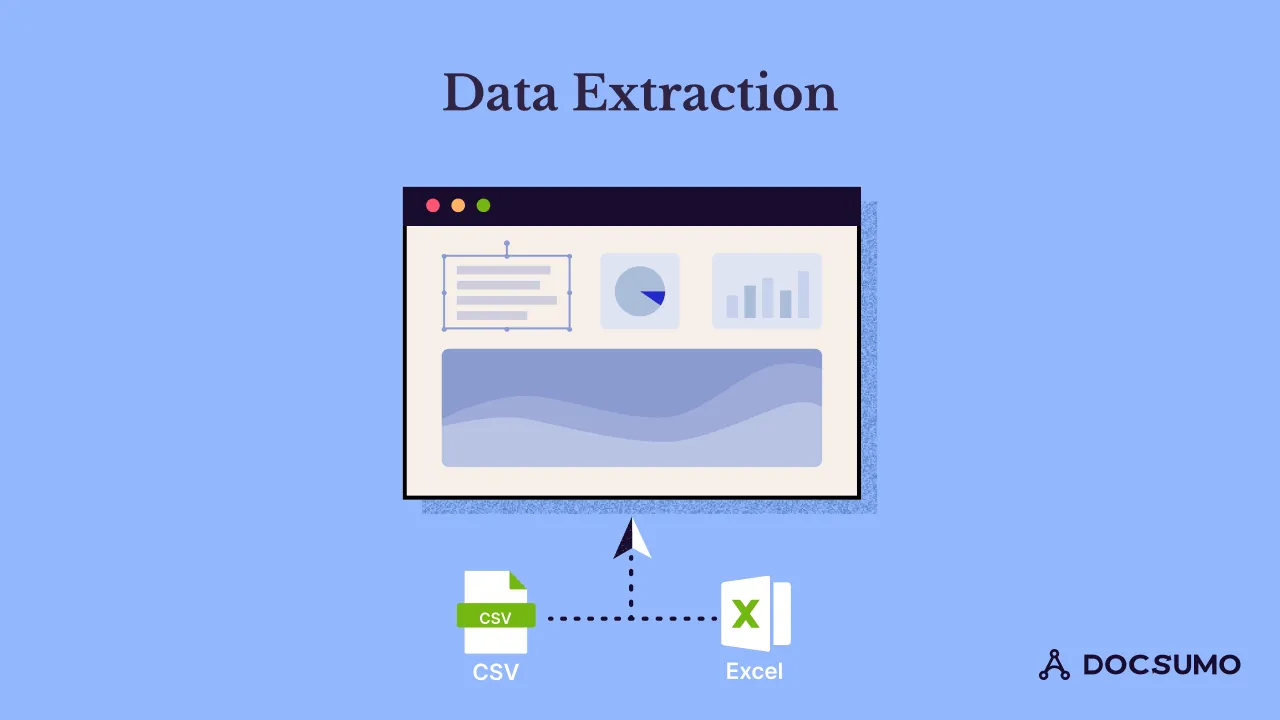
In practical terms, imagine a retail company seeking to analyze customer feedback across multiple platforms, such as social media, online surveys, and customer service logs.
Data extraction enables the company to seamlessly gather this dispersed information, consolidating it into a unified dataset for comprehensive analysis. This process allows businesses to uncover valuable insights regarding customer preferences, satisfaction levels, and emerging trends.
An example of data extraction is in the finance sector, where banks routinely extract transactional data from multiple sources to monitor customer spending patterns and detect fraudulent activities. By automating the extraction process, financial institutions can swiftly analyze vast volumes of transactions, identifying anomalies and mitigating risks effectively.
Data extraction enables organizations to access critical information promptly. Technologies like Optical Character Recognition (OCR) and intelligent data extraction further enhance efficiency by automating data extraction from unstructured sources such as scanned documents or images. This automation accelerates the extraction process and minimizes errors associated with manual data entry, ensuring the accuracy and reliability of the extracted information.
The process of extracting data offers up the path to important insights that are hidden in the vast amount of data. The easy extraction and transformation of data from many sources enables firms to fully utilize their data assets, resulting in well-informed decision-making and strategic growth.
Understanding Document Analysis#
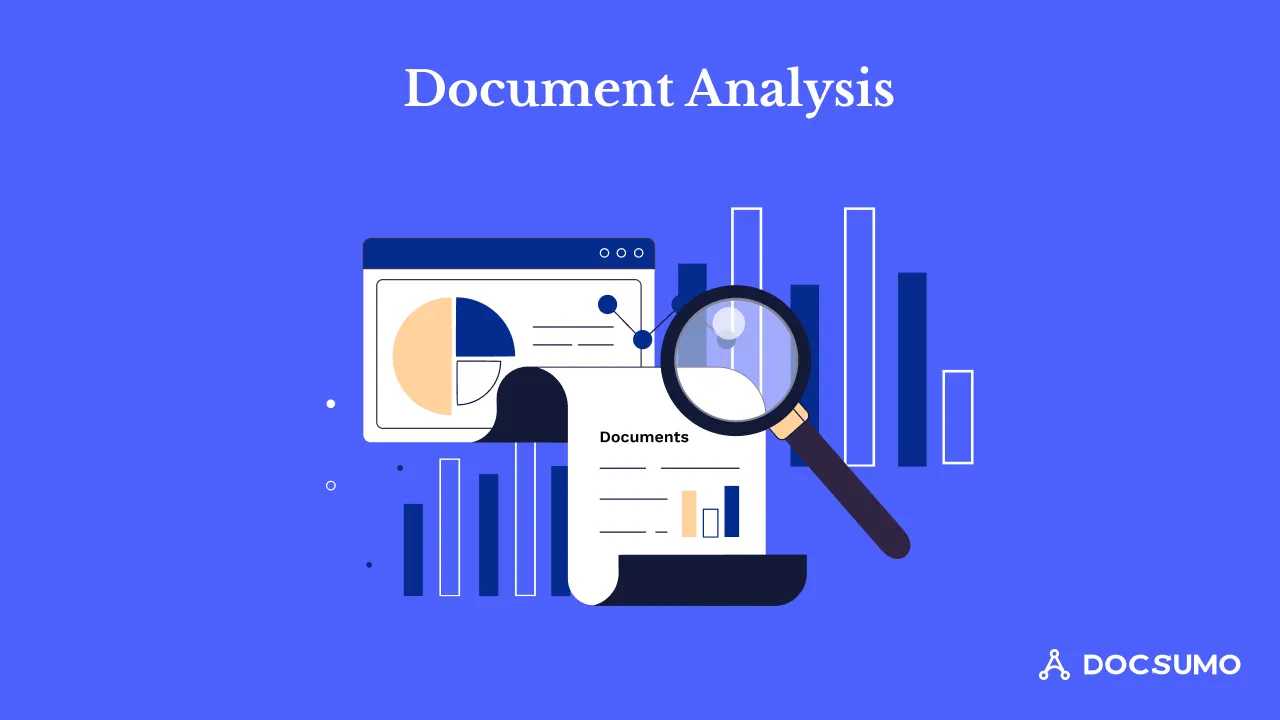
Document analysis is crucial in thoroughly examining documents to discern their content, context, and structure.
Unlike data extraction, which focuses on retrieving data from various sources, document analysis delves deeper into the actual content of documents, aiming to extract meaningful insights and understanding.
Applications of Document Analysis in different fields
Research
- Document analysis is crucial for examining historical texts, literature reviews, or archival documents to uncover trends, patterns, and perspectives.
- It helps researchers extract valuable insights, identify recurring themes, and synthesize information from diverse sources.
- It facilitates data-driven decision-making by providing a structured approach to analyzing large volumes of documents.
Legal
- Document analysis is employed for reviewing contracts, court records, and other legal documents to extract pertinent information.
- It assists in assessing risks, identifying potential legal issues, and supporting legal proceedings with evidence gathered from documents.
- It enhances due diligence processes by systematically analyzing contracts and legal agreements for compliance and accuracy.
Content Management Systems (CMS):
- Document analysis aids in categorizing and organizing vast repositories of documents within content management systems.
- It enables efficient retrieval of relevant information by tagging documents with appropriate metadata and keywords.
- It enhances content discovery and utilization by structuring unstructured data and improving search functionalities within CMS platforms.
Quantitative and qualitative methods
Document analysis combines quantitative and qualitative methods. Quantitative analysis uses statistics to measure aspects of document content (word frequency, sentiment), revealing trends and patterns.
Qualitative analysis explores language nuances, context, and meaning through techniques like thematic analysis, providing interpretations based on subjective understanding.
Benefits
- Deep understanding: Uncover patterns hidden meanings, and gain nuanced perspectives on complex topics.
- Improved information management: Organize documents and extract relevant data for better decision-making.
Challenges
- Time-consuming: Manual analysis, especially for large datasets, can be slow.
- Subjectivity: Qualitative analysis is prone to bias and inconsistencies, requiring careful validation.
Document analysis remains a powerful tool for extracting valuable insights from text, providing a comprehensive understanding crucial for informed decisions and knowledge creation. Lastly, it will be smart idea to use Google sheets alternatives to ensure efficient organization, and management of your data․
Head-to-Head Comparison: Data Extraction vs Document Analysis#
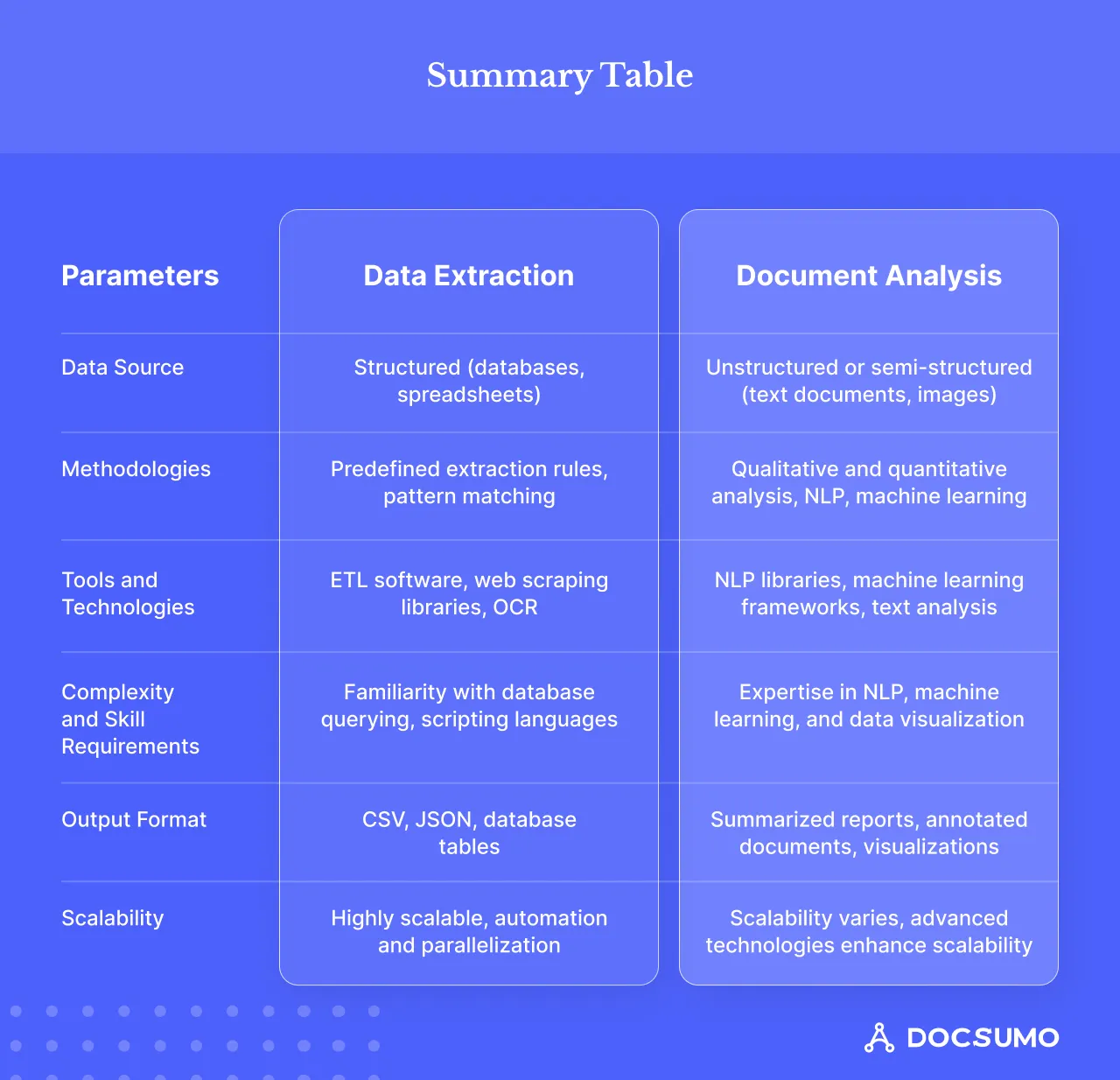
This section will compare data extraction and document analysis across various parameters to elucidate their distinctions.
Data Source
Data Extraction
- Primarily deals with structured data sources, such as databases, spreadsheets, and web pages.
- Well-defined data schema facilitates straightforward extraction processes.
Document Analysis
- Involves unstructured or semi-structured data sources, including text documents, images, and multimedia.
- Requires techniques to handle ambiguity and variability in document formats and content.
Methodologies
Data Extraction
- It relies on predefined extraction rules or queries to retrieve specific data fields or patterns.
- It often employs techniques like pattern matching, regular expressions, or API integration.
Document Analysis
- It utilizes qualitative and quantitative methods to analyze document content, context, and structure.
- It may involve techniques such as natural language processing (NLP), machine learning, and text mining.
Tools and Technologies
Data Extraction
- Common tools include Extract, Transform, and Load (ETL) software, web scraping libraries, and database management systems.
- Technologies like OCR and intelligent data extraction enhance efficiency in handling unstructured data sources.
Document Analysis
- It relies on various tools and technologies, including NLP libraries (e.g., NLTK, spaCy), machine learning frameworks (e.g., TensorFlow, scikit-learn), and text analysis software.
- Advanced techniques such as topic modeling and sentiment analysis are employed for deeper insights.
Complexity and Skill Requirements
Data Extraction
- Given the structured nature of the source data, processes are generally more straightforward.
- It requires familiarity with database querying, data manipulation techniques, and scripting languages like Python or SQL.
Document Analysis
- It demands a deeper understanding of both the subject matter contained within the documents and the technologies used to interpret that content.
- Its expertise in NLP, machine learning, and data visualization is often necessary to extract meaningful insights.
Output Format
Data Extraction
- Typically yields structured data formats such as CSV, JSON, or database tables.
- It enables easy integration with downstream analytical tools and systems.
Document Analysis
- Its outputs may vary depending on the analysis objectives, ranging from summarized reports to annotated documents or visualizations.
- It provides rich, contextualized insights into document content and themes.
Scalability
Data Extraction
- Generally scalable, especially when dealing with large volumes of structured data.
- It can be automated and parallelized to handle increasing data loads efficiently.
Document Analysis
- Scalability may vary depending on the complexity of analysis tasks and the volume of documents.
- Advanced technologies like distributed computing and cloud-based NLP services can enhance scalability.
Choosing the Right Approach: Data Extraction or Document Analysis#
Selecting between data extraction and document analysis hinges on several key factors, each crucial in determining the most suitable approach for a project. Consider the following aspects when making your decision:
a. Data Type
Structured Data
- Data extraction may be the preferred choice if your data is well-organized and resides in structured formats like databases or spreadsheets.
Unstructured Data
- For unstructured or semi-structured data, such as text documents or images, document analysis offers a more appropriate means of extracting insights.
b. Objective and End-Use
Specific Data Fields
- If you aim to extract specific data fields or patterns from a dataset, data extraction provides a targeted approach.
Content Understanding
- Document analysis proves invaluable when the objective is to gain a deep understanding of document content, context, and themes.
c. Data Volume
Large Volumes of Data
- Data extraction may be more efficient for projects involving large volumes of data, especially when dealing with structured data sources and automated processes.
Complex Content
- Document analysis is better suited for scenarios where the volume of documents is manageable, but the content is complex and requires nuanced interpretation.
d. Technology Requirements
Technological Capabilities
Assess your organization's technological capabilities and infrastructure. Data extraction may require integration with ETL tools or web scraping libraries, while document analysis often necessitates expertise in NLP and machine learning.
e. Costs and Time Efficiency
Budget Constraints
Consider the costs of implementing each approach, including tooling, expertise, and infrastructure requirements.
Time Sensitivity
Evaluate the urgency of the project and the time required to achieve desired outcomes. Data extraction may offer faster results for structured data, whereas document analysis could be more time-consuming but yield deeper insights.
f. Compliance
Regulatory Requirements
Consider regulatory compliance considerations, such as GDPR or HIPAA, which may dictate how data is extracted, processed, and stored.
Data Sensitivity
It assesses the sensitivity of the analyzed data and ensures that the chosen approach complies with security and privacy regulations.
g. Real-World Scenarios
Customer Feedback Analysis
- Data Extraction: Data extraction would be suitable if the goal is to aggregate and analyze customer feedback from structured sources like online forms or CRM systems.
- Document Analysis: Document analysis would be more appropriate for in-depth analysis of customer sentiment expressed in unstructured sources such as social media comments or email threads.
Legal Document Review
- Data Extraction: Data extraction could streamline the process when extracting specific clauses or data points from contracts or legal documents in bulk.
- Document Analysis: Document analysis would be preferable for a comprehensive review and analysis of legal documents to identify risks, inconsistencies, or patterns.
Academic Research
- Data Extraction: Data extraction could facilitate statistical analysis and hypothesis testing in studies requiring quantitative analysis of structured datasets.
- Document Analysis: Document analysis would be more suitable for qualitative research exploring themes, perspectives, or discourse within textual documents like interviews or literature reviews.
Conclusion#
Integrating data extraction and document analysis holds immense potential for unlocking deeper insights and driving operational excellence.
While data extraction streamlines the retrieval and structuring of data from diverse sources, document analysis delves into the nuances of content, context, and meaning, offering rich insights into unstructured information.
In the future of data management, the synergy between these processes will be paramount in maximizing data utility and enhancing business intelligence.
Organizations can harness the full spectrum of their data assets by adopting a balanced approach that leverages the strengths of both data extraction and document analysis. This integration enables more informed decision-making, empowers data-driven strategies, and fuels operational efficiency across various domains.
Docsumo is one option. Docsumo's advanced data extraction and document analysis capabilities empower organizations to extract actionable insights from unstructured documents swiftly and accurately.
With features like OCR, intelligent data extraction, and seamless integration with existing systems, Docsumo simplifies the extraction and analysis process, enabling organizations to unlock the full potential of their data assets.
First published .