OCR for tax forms: how to extract data from W-2s, 1099s, 1040s and K-1s
For lenders, accounting firms and finance teams that key IRS forms by hand. You'll see how tax form OCR works, which forms and fields matter, where it goes wrong and how to automate it.

Key takeaways
- OCR for tax forms reads IRS forms such as the W-2, 1099, 1040 and K-1 and turns each box and line into structured data you can check and use.
- OCR alone only produces text. Usable tax data needs extraction that maps each value to its box or line, and validation that checks it.
- Standard forms are still hard: the IRS revises forms each year, line numbers and instructions look like values, and many forms are filled in by hand.
- The most useful checks are cross-form: W-2 wages against the 1040, 1099 income against Schedule C, and tax figures against pay stubs and bank deposits.
- Automation moves people from typing to reviewing flagged fields; Docsumo reports 99% field-level accuracy on 250+ document types.
On this page
- What is OCR for tax forms?
- Common IRS tax forms and the data in them
- How tax form OCR works
- Manual vs automated tax form processing
- Why tax forms are hard to OCR
- Checks to run on extracted tax data
- Where tax form OCR is used
- How to automate tax form processing with Docsumo
- The bottom line
- Frequently asked questions
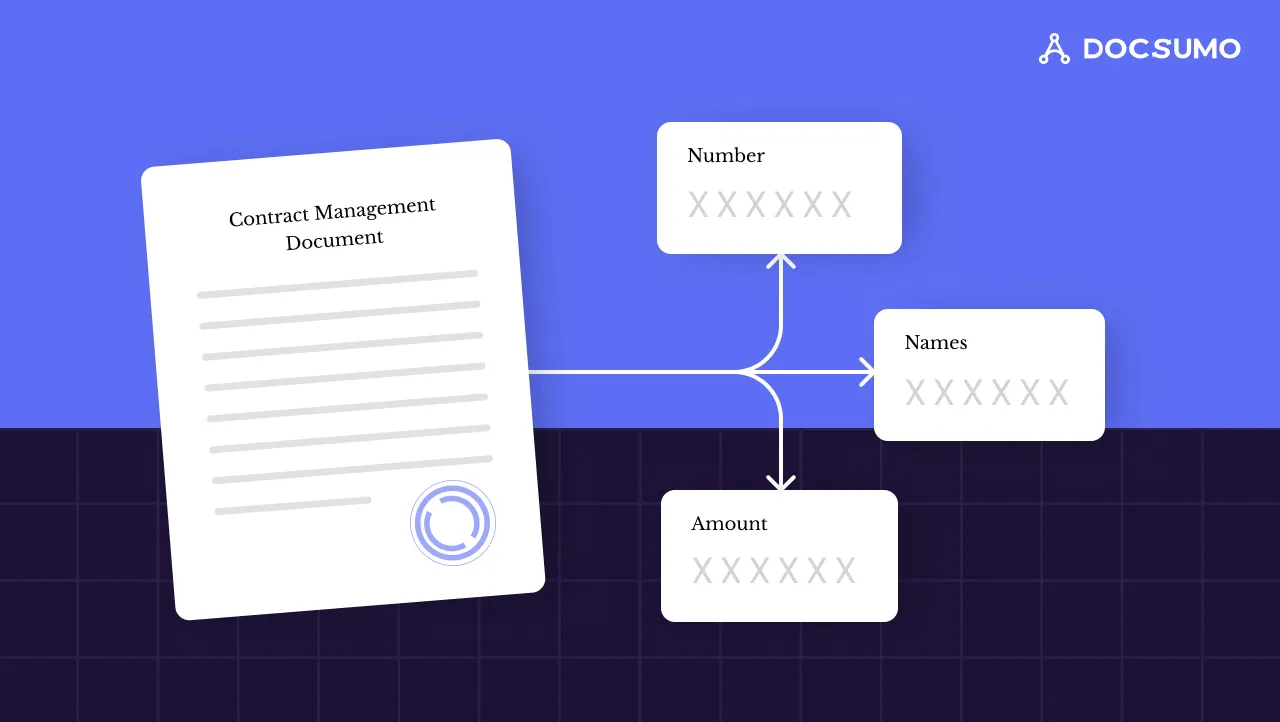
OCR for tax forms reads IRS forms such as the W-2, 1099, 1040 and Schedule K-1, whether scanned, photographed or PDF, and turns each box and line into structured data. On its own, OCR only produces text; tax form automation adds extraction that maps each value to the right box and validation that checks it before anyone uses it. This guide covers the forms and fields that matter, how tax form OCR works, why standard forms still trip it up, and the checks to run.
What is OCR for tax forms?#
Optical character recognition (OCR) turns an image of a page into machine-readable text. Tax forms are a natural fit because they're standardized, and there are a lot of them: the IRS expected about 164 million individual income tax returns in 2026 alone, and every one arrives with W-2s, 1099s or schedules that lenders, accountants and finance teams also read.
The catch is that a text dump of a W-2 isn't useful. You need "wages: $84,200" in the right field, from the right box, for the right tax year. That takes three layers working together.
OCR
Reads the characters on the page, printed or handwritten, after the image is straightened and cleaned. The output is text with positions.Extraction
Works out which text is a value and which box or line it belongs to, using the form's labels and layout rather than fixed coordinates. The output is named fields.Validation
Checks the fields: formats for SSNs and EINs, totals that add up, and figures that agree across forms. Anything uncertain goes to a person.
Common IRS tax forms and the data in them#
Lenders, accountants and finance teams see the same handful of forms again and again. Tax documents are a large part of the underwriting file for personal, small business and mortgage loans.
| Form | What it is | Data usually extracted |
|---|---|---|
| W-2 | Wage and Tax Statement an employer gives each employee | Employer and EIN, wages, federal and state tax withheld, retirement contributions |
| 1099 (NEC, MISC, INT, DIV and others) | Information returns for income that isn't wages, such as contractor pay, interest and dividends | Payer, recipient, amount paid, tax withheld |
| W-9 | Request for Taxpayer Identification Number and Certification, used when a business pays a contractor or opens an account | Name, business name, tax classification, address, SSN or EIN |
| 1040 and schedules | U.S. individual income tax return | Filing status, wages, business income (Schedule C), rental income (Schedule E), adjusted gross income, tax owed or refunded |
| 1120-S and Schedule K-1 | Income tax return for an S corporation, with a K-1 for each shareholder | Ordinary business income, deductions, each shareholder's ownership percentage and share of income |
| 1120 and 1065 | Returns for C corporations and partnerships | Revenue, cost of goods sold, deductions, taxable income, partner allocations |
A W-2 goes only to employees. Independent contractors doing the same work get a 1099 instead, which is why lenders ask self-employed borrowers for 1099s and full tax returns rather than W-2s. See tax form extraction for the forms Docsumo reads out of the box, and our guide to 1099 data extraction for that form in detail.
How tax form OCR works#
A tax packet goes from mixed pages to checked data in the same few stages, whatever tool you use.
- Scanned returns
- PDF W-2s and 1099s
- Phone photos
- E-filed return PDFs
- 01Clean the image
- 02Identify each form
- 03Read and map boxes
- 04Validate the values
- Capture and cleanForms arrive as scans, PDFs and phone photos. Each page is straightened, cropped and cleaned so faint print and stamps don't turn into stray characters.
- ClassifyA packet often mixes a 1040, its schedules, several W-2s and 1099s. Each page is identified by form type and tax year, and multi-page returns are kept together.
- Read and mapOCR reads the text, then extraction ties each value to its box or line: W-2 box 1 is wages, box 2 is federal income tax withheld. Models that read labels and context cope with a new form revision far better than templates tied to fixed positions.
- ValidateFormat checks (SSN, EIN, dates, amounts), math checks (totals and subtotals) and cross-form checks run on every packet. Values that fail or were read with low confidence go to a reviewer.
- OutputThe checked data goes out as Excel, CSV or JSON, or straight into a tax, lending or accounting system through an API.
Manual vs automated tax form processing#
Retyping forms is slow in tax season and error-prone all year: a transposed digit in an SSN or a wage figure keyed from the wrong box travels into every calculation after it.
Manual entry
- Staff key every box from every form, page by page
- Each tax year's form changes have to be learned by the person reading it
- Errors surface late, in an underwriting query or an IRS notice
- Tax season means overtime or temporary staff
Automated extraction
- Forms are read into named fields in minutes
- New form revisions are read from labels, not re-templated by hand
- Format, math and cross-form checks run on every packet
- People review only the fields that were flagged
Docsumo reports these results across the documents it processes:
- 99%field-level accuracy on 250+ document types
- 95%+of documents processed straight through
- <5 minper document, down from 2+ hours
Why tax forms are hard to OCR#
The forms are standard, but the documents you receive aren't. These are the problems to test any tool against.
Forms change from year to year
The IRS revises forms regularly, so the same figure can sit on a different line in two tax years. Template-based OCR breaks when that happens; test any tool on each new form year.Box numbers and instructions read as values
Line numbers, box labels and notes such as "Attach Form(s) W-2" sit right next to the entry boxes. Basic OCR can capture them as the value.Mixed data types in one field
Addresses need splitting into street, city, state and ZIP; SSNs and EINs have fixed formats with dashes. Extraction needs format checks per field type.Handwritten entries
Paper forms are often filled in by hand, and handwriting varies far more than print. Handwritten fields need a confidence check and review when the reading is uncertain.Scan quality
Smudges, low resolution, skew and faint carbon copies all cut accuracy. Clean images help, but the tool should flag what it can't read rather than guess.Mixed packets
One PDF can hold a 1040, 5 schedules and a dozen W-2s and 1099s. Without page classification, data from one form ends up in another's fields.
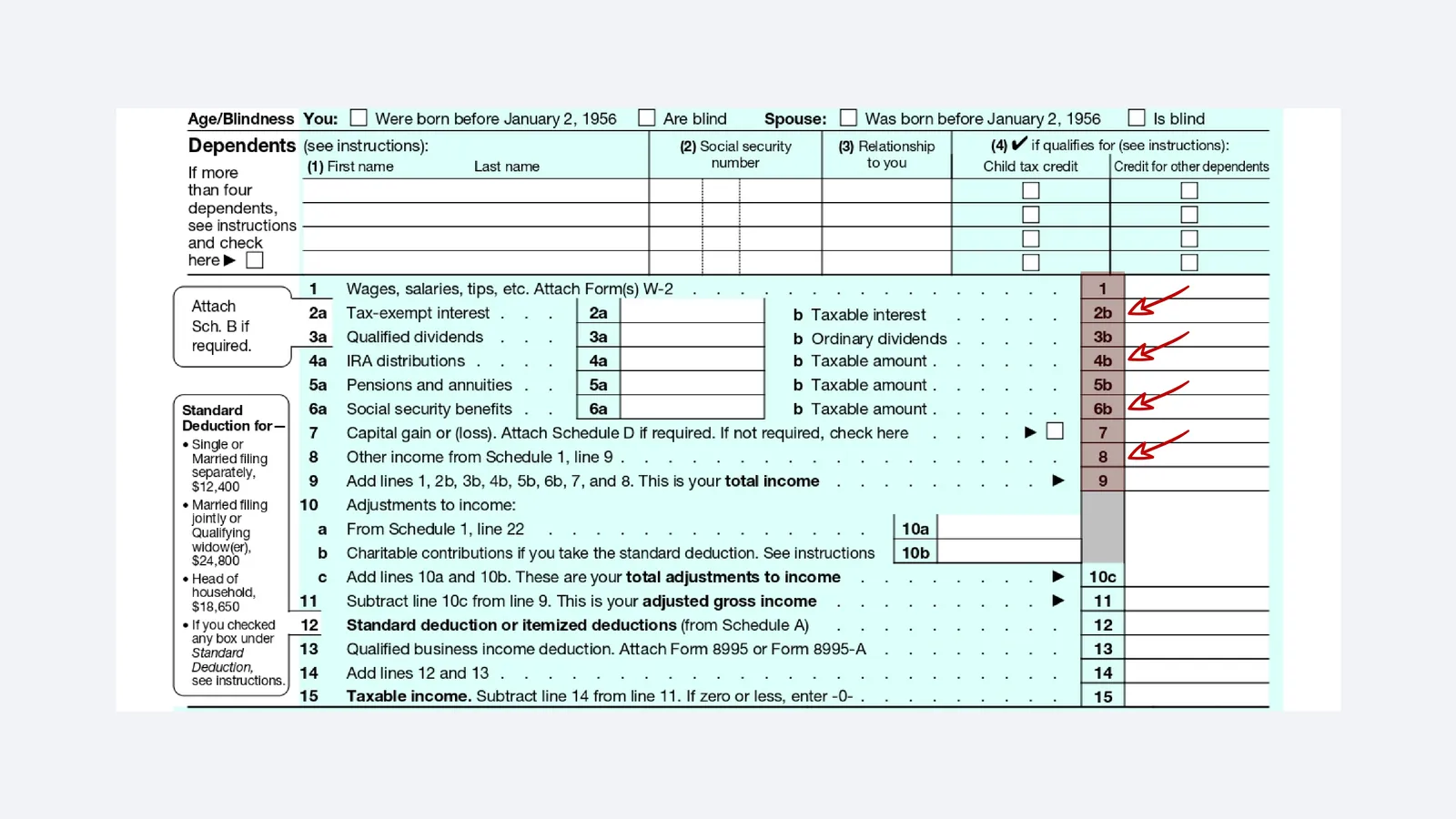
Docsumo reads handwritten text as well as print, but for tax data a human check on low-confidence handwritten fields is still the right default.
Checks to run on extracted tax data#
Extraction gives you numbers; these checks tell you whether to trust them. Most run automatically, so a person only sees the forms that fail.
- W-2 wages tie to the 1040The sum of box 1 on all W-2s should match the wages line on the return (line 1a on recent Form 1040s).
- 1099 income shows up on the return1099-NEC and 1099-MISC amounts should be reflected in Schedule C gross receipts or another schedule.
- K-1 figures match the business returnEach K-1's ordinary income agrees with the entity return and the owner's share, and the owners' percentages add up to 100%.
- Identifiers are valid and consistentSSNs and EINs have the right format and match across every form in the packet.
- Tax years are rightEvery form is for the year you asked for, and multi-year requests have no gaps.
- Tax figures agree with other documentsFor lenders, income on the return is compared with pay stubs, bank deposits and the application.
Where tax form OCR is used#
| Team | Forms | What the data is for |
|---|---|---|
| Mortgage and consumer lenders | W-2, 1099, 1040 with schedules | Income verification, especially for self-employed borrowers |
| Business lenders and credit teams | 1120, 1120-S, 1065, K-1 | Spreading business income, owner income and ability to repay |
| Accounting and tax firms | W-2, 1099, 1098, K-1, prior-year returns | Preparing client returns without re-keying source documents |
| Accounts payable and vendor onboarding | W-9 | Vendor tax IDs and classification for year-end 1099 reporting |
In lending, the figures usually feed mortgage income verification or financial spreading, where tax returns sit next to bank statements and financial statements. Lenders also check that deposits on bank statements support the income on the return.
How to automate tax form processing with Docsumo#
Docsumo reads tax forms with pre-trained models, so there's no template to build for each form or tax year. It classifies the pages in a packet, extracts each box and line, runs validation rules and sends fields it isn't sure of to a person. Clean data goes to your systems through the API and webhooks or as an export. On Enterprise plans, cross-document validation compares tax forms with pay stubs and bank statements in the same file, and case management keeps a borrower's or client's documents together.
What Docsumo doesn't do: it extracts and checks tax data, but it doesn't prepare or file returns or give tax advice. The data goes into the tax, lending or accounting software you already use. To see how OCR fits into document processing more widely, read our guide to OCR document processing.
The bottom line#
Tax forms look like the easiest documents to automate because they're standard, but year-to-year revisions, box labels, handwriting and mixed packets break plain OCR. What works is OCR plus extraction by box and line, plus checks that tie the forms to each other and to the rest of the file. Test any tool on your own forms, across several tax years, before you commit.
Book a demo with a few of your own tax forms, or start a free trial: 14 days, up to 1,000 pages.
Frequently asked questions#
Can OCR read IRS tax forms?
Yes. OCR reads printed and handwritten text on forms such as the 1040, W-2, 1099, W-9 and 1120-S. To get usable data, it needs extraction that maps each value to the right line or box and checks it.
Why is tax form extraction hard if the forms are standard?
The IRS revises forms, so fields move between years. Forms are also full of line numbers and instructions that basic OCR can mistake for values, and many are filled in by hand.
Which tax forms do lenders need to extract?
Mostly W-2s and 1099s for income, 1040s with schedules for individual and self-employed borrowers, and 1120-S, 1120 or 1065 returns with K-1s for business owners. See tax form extraction.
What should I look for in OCR software for tax forms?
Test it on your own forms, including scans, handwritten forms and several tax years. Look for extraction by box and line rather than plain text, validation rules, a review step for low-confidence fields, and output to your systems by API or export.
Can OCR extract data from Schedule K-1s?
Yes, if the tool maps K-1 boxes rather than just reading text. The key fields are the entity, the partner or shareholder, the ownership percentage and each income box, which lenders compare with the business return and the owner's 1040.
Is it safe to run tax forms through OCR software?
Tax forms hold Social Security numbers and income, so check the vendor's security before sending any. Docsumo is SOC 2 Type 2, HIPAA and GDPR compliant; see security.
Sources
- IRS: IRS announces first day of 2026 filing season (about 164 million individual returns expected)
- IRS: About Form W-2, Wage and Tax Statement
- IRS: About Form 1099-NEC, Nonemployee Compensation
- IRS: About Form W-9, Request for Taxpayer Identification Number and Certification
- IRS: About Form 1040, U.S. Individual Income Tax Return
- IRS: About Form 1120-S, U.S. Income Tax Return for an S Corporation
First published . Last updated .