Instant bank account verification: methods, rules and when to use each
For lenders, payment teams and fintech operators: how instant account verification works, how it compares with micro-deposits, prenotes and bank statements, and which rules apply.

Key takeaways
- Instant bank account verification (IAV or IBV) confirms in seconds that a bank account exists, is open and belongs to the person or business giving it to you.
- The main methods are open banking login, account validation databases, micro-deposits, prenotes and bank statement review. Only the first two are instant.
- Nacha requires originators of WEB debits to validate an account number the first time it's used and whenever it changes, as part of a commercially reasonable fraud detection system.
- Instant verification confirms the account. Bank statements are still needed when you have to understand the account: income, cash flow, balances and deposits for underwriting.
- The CFPB's 2024 Section 1033 open banking rule is enjoined and being rewritten, so data-access terms for account-linking providers are still in flux in 2026.
On this page
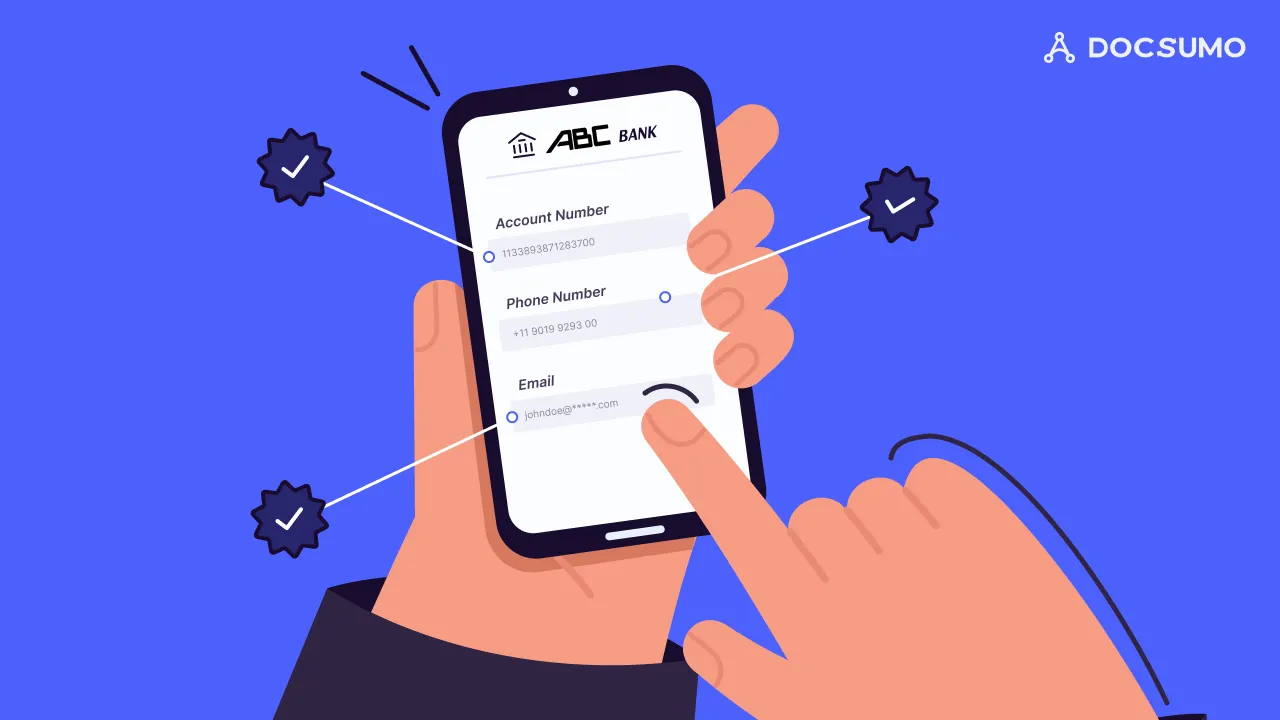
Instant bank account verification (IAV, also called instant bank verification or IBV) confirms in seconds that a bank account exists, is open and belongs to the person or business giving it to you. It works either through an open banking connection, where the customer logs in to their bank, or by checking the account and routing numbers against account-status databases. Lenders, payment companies and platforms use it before debiting or crediting an account for the first time.
This guide explains how instant verification works, compares it with micro-deposits, prenotes and bank statements, covers the Nacha rule that applies to online debits, and shows where bank statements still fit.
What instant bank account verification checks#
Account verification answers three questions.
Validity
Does this account and routing number combination exist?Status
Is the account open and able to receive or send payments?Ownership
Does the name on the account match the customer?
Some methods also return balance and transaction data, which a lender can use for affordability or fraud checks. That's where account verification starts to overlap with bank statement analysis.
How instant account verification works#
There are two instant methods. Both end in the same place: a verified account and a record of how it was verified.
- Bank login
- Account and routing numbers
- 01Connect or look up
- 02Confirm the account is open
- 03Match the owner's name
- 04Log the result
Open banking (credential-based) verification
- The customer logs inThey choose their bank in your onboarding flow and log in through a data aggregator's secure widget.
- The bank shares the detailsThe bank or aggregator returns the account and routing numbers, the account holder's name and, with consent, balances and transactions.
- You store a tokenYou keep a token for the connection, not the customer's credentials.
It's fast and returns ownership data directly from the bank, but depends on the customer's bank being supported and on the customer being willing to log in.
Database (non-credential) verification
The customer types their account and routing numbers, and you check them against a network or database of account status and ownership data built from bank contributions and payment history. It needs no login, so drop-off is low, but coverage and match quality vary by provider and bank.
Slower alternatives
Micro-deposits
One or two small deposits are sent to the account, and the customer confirms the amounts. It works for almost any account but takes a day or more and many customers never come back to confirm.Prenotes
A zero-dollar ACH entry checks that the account can receive entries. It confirms the account is valid, not who owns it.Bank statements or voided checks
The customer uploads a document showing the account. It proves ownership and history but needs to be read and checked for tampering.
Comparing account verification methods#
Only the first two methods are instant, and only bank statements show the full history of the account.
| Method | Speed | Confirms ownership | Returns activity data | Best for |
|---|---|---|---|---|
| Open banking login | Seconds | Yes, from the bank | Yes, with consent | Onboarding, lending, account funding |
| Database validation | Seconds | Often, as a name match score | No | Payouts, bill pay, low-friction onboarding |
| Micro-deposits | 1 or more business days | Indirectly (customer can see the account) | No | Fallback when instant methods fail |
| Prenote | Several days | No | No | Payroll and recurring ACH set-up |
| Bank statement review | Minutes if automated | Yes, from the statement header | Yes, full transaction history | Underwriting, income and asset checks |
The Nacha account validation rule for WEB debits#
If you pull money from consumer accounts through ACH debits authorized online (WEB debits), Nacha rules apply. Since March 2021, originators have had to include account validation in their "commercially reasonable" fraud detection system. In practice that means validating an account number:
- the first time it's used for a WEB debit, and
- whenever the customer changes it.
Nacha doesn't mandate a method. Prenotes, micro-transactions and third-party validation services are all named as acceptable, so instant verification is one way to comply, not the only one. Check with your ODFI and advisers on what counts as commercially reasonable for your program.
Open banking regulation in 2026
The CFPB finalized its Personal Financial Data Rights rule under Section 1033 in October 2024, which would have required banks to share account data with authorized third parties. The rule is enjoined by a federal court and under reconsideration: the first compliance date in April 2026 passed without effect, and in August 2026 the CFPB sent a new proposal for review. If your verification depends on open banking access, watch how the replacement rule treats fees and data scope.
When instant verification isn't enough#
Instant verification tells you an account is real and owned by your customer. It doesn't tell you whether they can repay a loan. For that, lenders need to understand the account's activity.
Income
Regular payroll or business deposits over several months.Cash flow
Average daily balance, inflows against outflows, seasonality.Risk signals
NSF and overdraft fees, returned items, payments to other lenders.Large deposits
Amounts that need to be sourced, especially in mortgage lending.
Some borrowers won't or can't link their bank, and many small business lenders and mortgage lenders still ask for statements. That's where bank statement extraction comes in: it turns uploaded PDF or scanned statements into a clean transaction table, checks that the balances add up, and flags signs of editing. Cross-document validation checks the statement against the application and pay stubs. Docsumo reads the statements; it isn't an account-linking or ACH validation service, so pair it with one for the instant check.
- 99%field-level accuracy across 250+ document types
- 64%lower fraud with cross-document validation
- 95%+of documents processed straight through, without manual review
Read more about bank statement verification for business loans and how to spot fake bank statements.
Security and privacy considerations#
Whichever method you use, the same controls apply.
- Don't store credentialsUse a provider that tokenizes the connection.
- Ask for consent clearlyTell customers what data you access and why.
- Keep only what you needAccount and routing numbers, name match and, if used, the data behind a credit decision.
- Log every verificationKeep a record of the method, result and date for audits and disputes.
- Watch for changesPayment fraud is common: in the AFP's 2026 survey, 76% of US organizations reported attempted or actual payments fraud in 2025. Re-verify when bank details change, and confirm changes through a known contact.
- Vet document processors tooIf you collect statements, use a vendor with SOC 2 Type 2 and GDPR compliance.
The bottom line#
Instant bank account verification confirms that an account is real, open and owned by your customer, in seconds instead of days. Use it at onboarding and whenever bank details change, and to meet Nacha's WEB debit validation rule. When the decision depends on what happens in the account, pair it with bank statement analysis. Docsumo's IDP for lending handles the statement side.
Book a demo with a few of your own statements, or start a free trial.
Frequently asked questions#
How does instant bank account verification work?
The customer either logs in to their bank through a secure connection that shares account details with you, or you check the account and routing numbers against a database of account status and ownership data. Both return a result in seconds.
What is the difference between instant verification and micro-deposits?
Instant verification returns a result in seconds. Micro-deposits send one or two small amounts to the account, and the customer confirms them a day or more later. Micro-deposits work for almost any account but add friction and drop-off.
Is instant account verification required by law?
No law names a method, but Nacha rules require originators of consumer WEB debits to validate an account on first use and when it changes. Instant verification, micro-deposits and prenotes can all meet that rule.
When do lenders still need bank statements?
When the decision depends on account activity, not just the account's existence. Underwriting uses statements to verify income, measure cash flow, source large deposits and spot NSFs. See bank statement extraction.
Is instant bank verification safe?
Reputable providers use encrypted connections and tokenized access, so you don't store the customer's banking credentials. Check the provider's security certifications and how long data is kept.
Sources
- Nacha: Supplementing Fraud Detection Standards for WEB Debits
- Cozen O'Connor: Section 1033 compliance date, open banking rule enjoined and under reconsideration (2026)
- Consumer Finance Monitor: CFPB sends new Section 1033 proposal to OIRA for review (Aug 2026)
- AFP: 2026 Payments Fraud and Control Survey (press release)
First published . Last updated .