Key drivers to enable digital transformation
Seven forces push companies to transform digitally, from customer expectations to workflow efficiency. Here is what each one means and what to keep in mind.


On this page
The key drivers of digital transformation are customer expectations, data analytics, agility and speed, cost savings, regulatory compliance, talent acquisition and retention, and workflow efficiency. Each one pushes a business to adopt digital technologies that improve its processes and customer experience. Digital transformation itself is the integration of those technologies into every area of a business, changing how it operates and delivers value to customers.
Below, we go through each driver one by one, then list points to keep in mind while adopting digital transformation.
1. Customer expectations#
Customers now expect businesses to have a strong digital presence and be able to interact with them through digital channels.
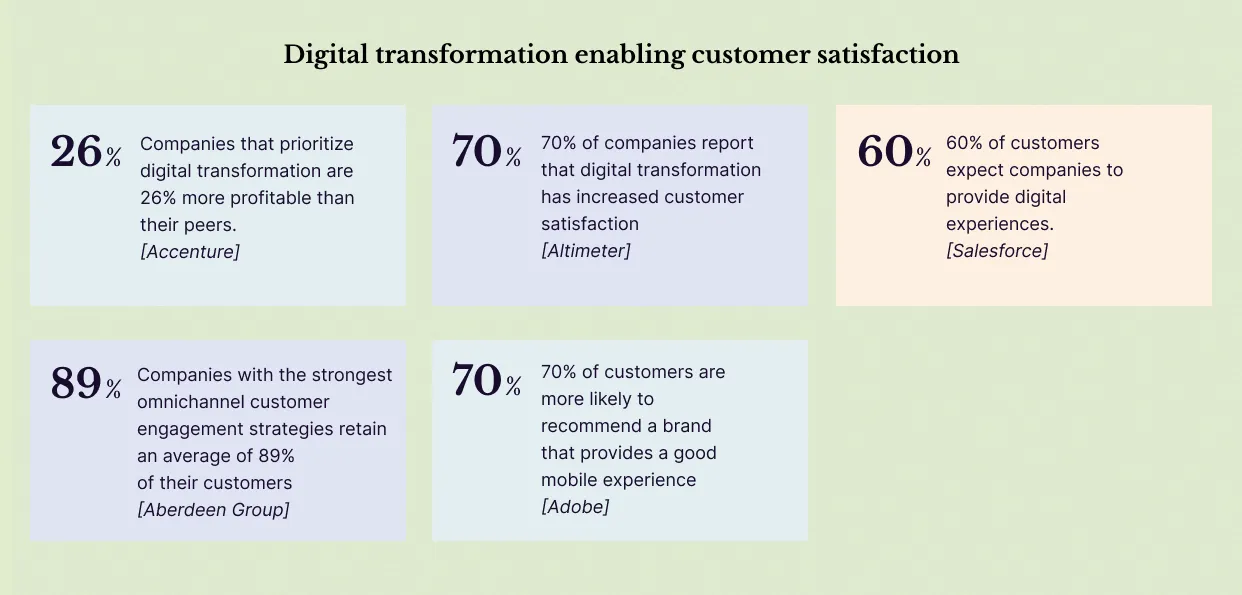
Customers want to easily:
- Find information about a business online
- Make purchases online
- Communicate with businesses through various digital channels like social media, email, and chatbots.
They also expect businesses to provide personalized experiences based on their previous interactions and preferences. Businesses meeting these expectations are more likely to build loyal customers willing to recommend them to others.
2. Data analytics#
Businesses are generating large amounts of data that can be used to optimize their operations, and gain a competitive advantage. Gaining insights into customer behavior, market trends, and other key performance indicators is just a few clicks away with automated data analytics.
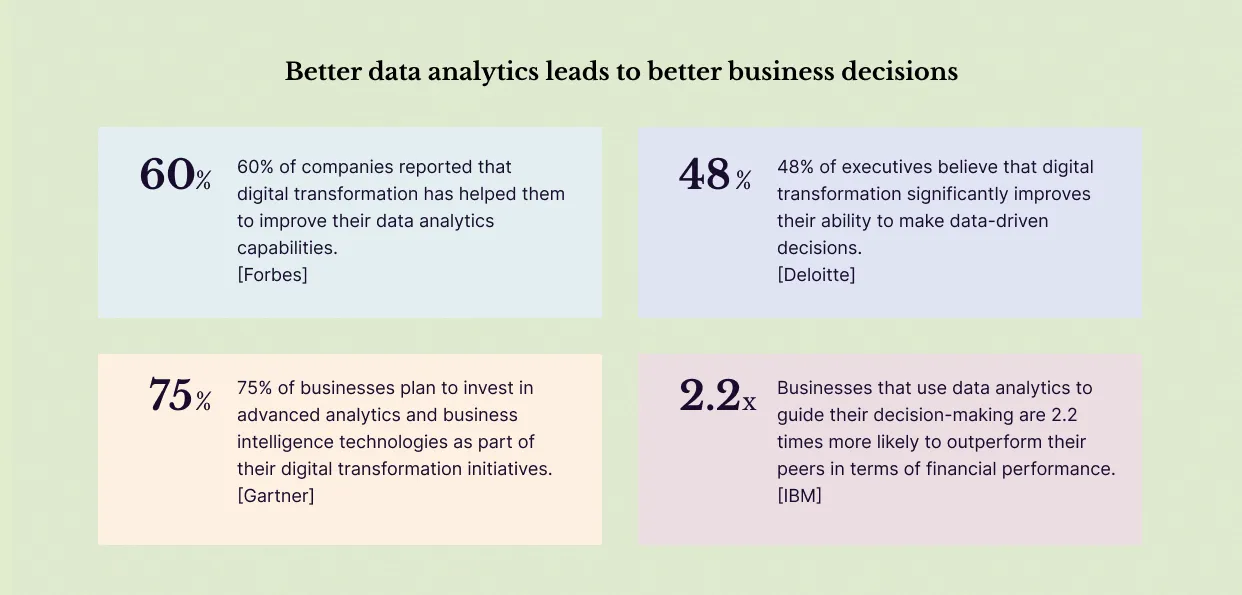
Data caged in scanned/physical documents is only valuable if you can use it for decision-making. Businesses using automated document processing tools to convert this unstructured information into structured insightful data have competitive advantage over others.
3. Agility and speed#
Digital transformation can help businesses become more agile and responsive by streamlining processes, reducing manual labor, and increasing department collaboration.
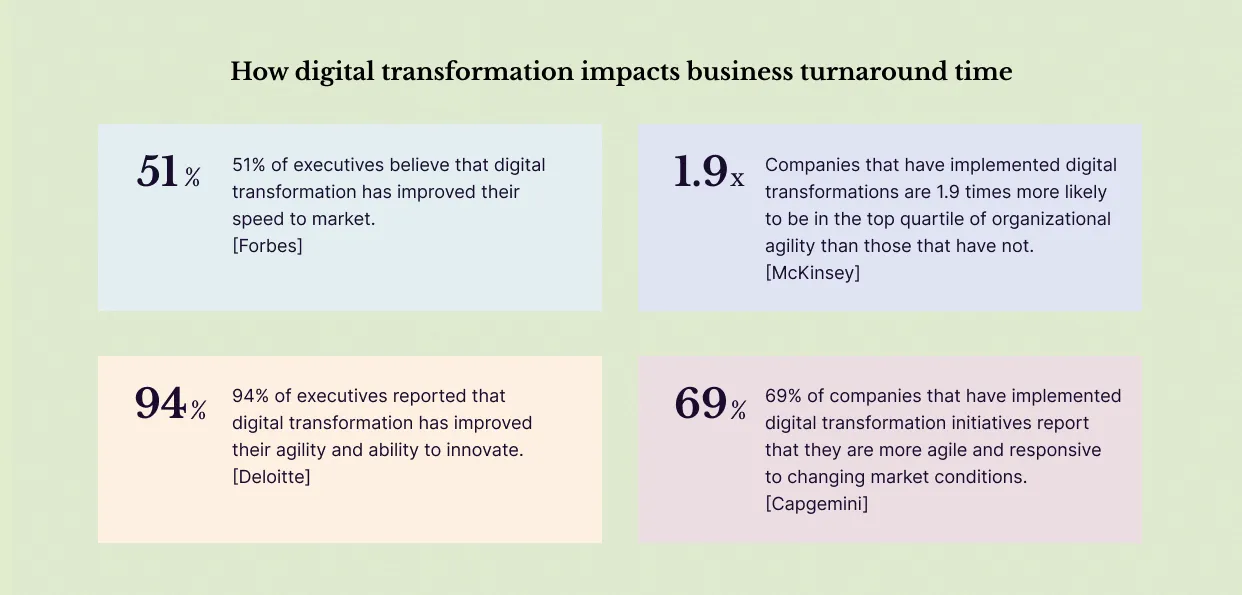
For example, implementing cloud-based software can enable businesses to access data and applications from anywhere, allowing for faster decision-making processes. Additionally, automation tools can help businesses reduce the time and resources spent on manual tasks, freeing employees to focus on higher-level work.
4. Cost savings#
Automating different repetitive and manual tasks, businesses can reduce the need for human intervention in day-to-day tasks. Streamlining repetitive tasks means employees finish their work quickly thus getting more done in less time.
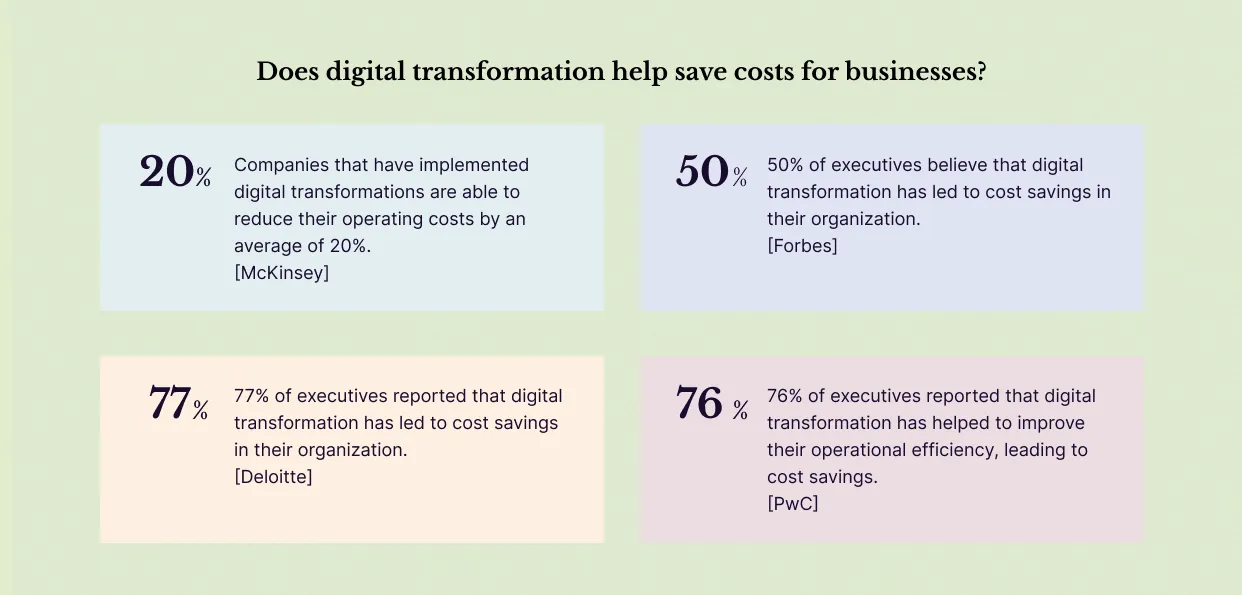
For example, a retail business can automate inventory management through digital tools, reducing the need for manual counting and tracking. Similarly, a manufacturing company can use digital systems to automate supply chain management, reducing the risk of stock-outs or overstocking.
Another example is digital payments, which can reduce costs associated with traditional payment methods such as paper checks or cash. Digital transformation can also lead to increased efficiency in business operations, lowering overhead costs and improving profitability. For example, a company can implement a digital collaboration platform that enables remote work, reducing the need for office space and associated expenses.
5. Regulatory compliance#
Digital transformation can help businesses ensure they are meeting all legal and regulatory requirements, particularly when it comes to data privacy and security.
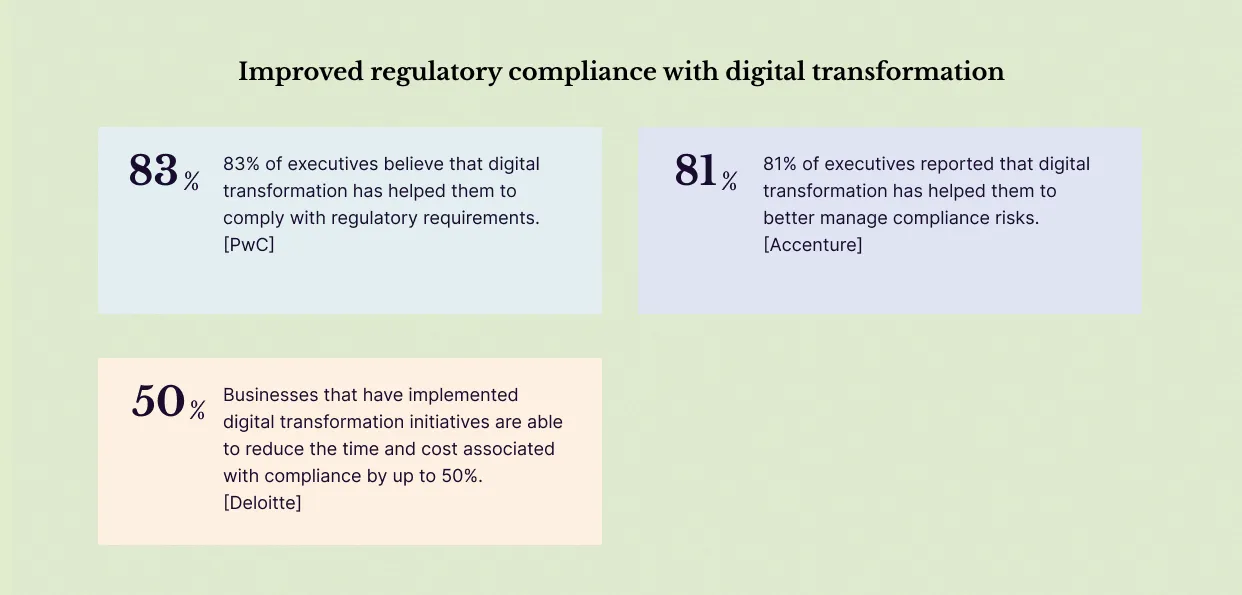
For example, intelligent document processing (IDP) software can be used to automate the extraction and processing of sensitive data from various documents, so it's handled the same way every time under data protection rules.
6. Talent acquisition and retention#
As businesses continue to adopt digital technologies, the expectations of employees have also evolved. Today's workforce expects access to the latest digital tools and technologies in the workplace, and businesses that fail to provide them risk losing top talent. To attract and retain the best employees, businesses must embrace digital transformation and provide employees with the tools they need to do their jobs effectively.
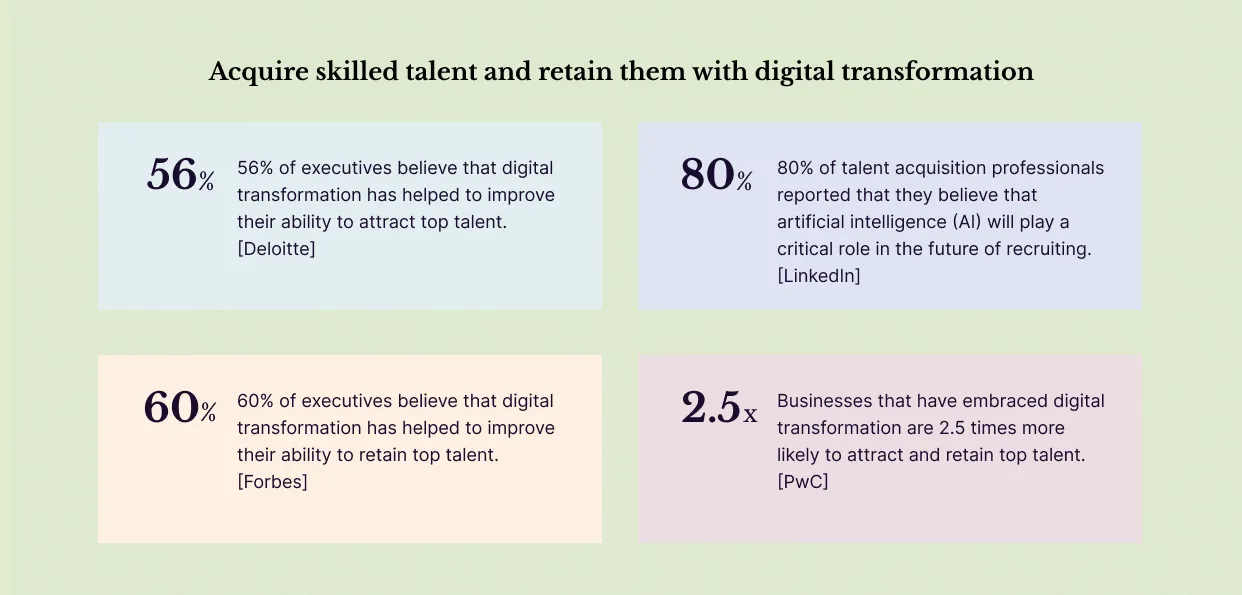
For example, a company that has adopted cloud-based project management software can allow its employees to collaborate on projects from anywhere, at any time. This allows for greater flexibility in work arrangements, which can be a key factor in attracting and retaining top talent.
7. Workflow efficiency#
One of the key benefits of digital transformation is increased workflow efficiency, as it allows businesses to automate and streamline their processes, ultimately resulting in cost savings and increased productivity.
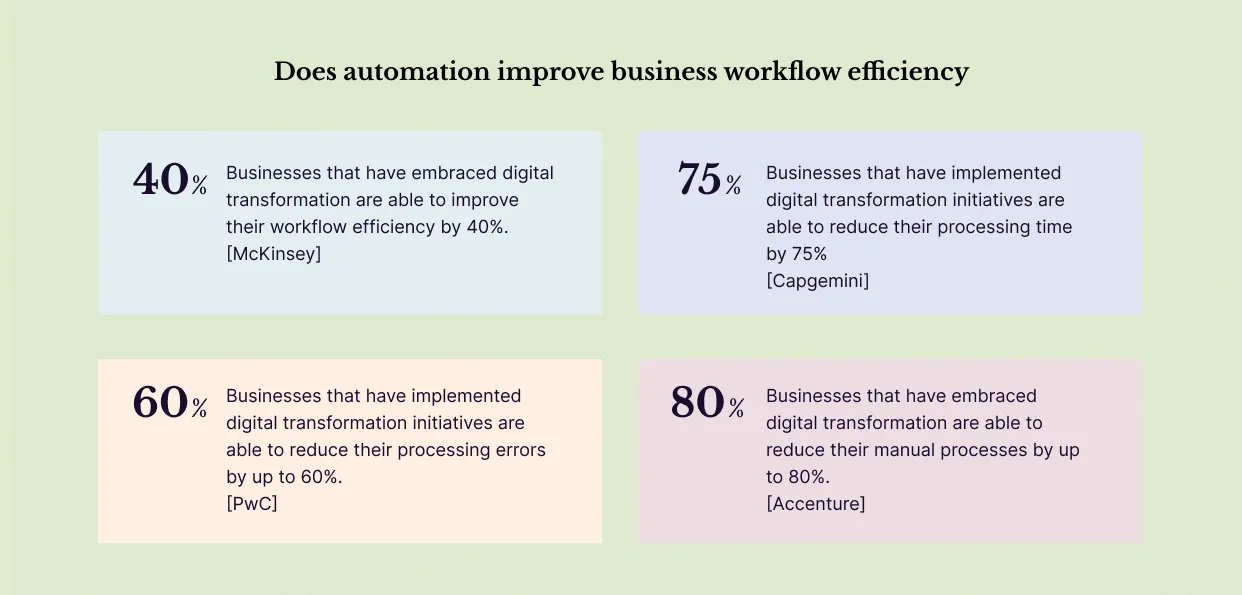
Tools such as cloud computing and AI document extraction help streamline tasks, improve decision-making and enhance collaboration among team members, resulting in faster and more efficient workflows.
Points to remember while adopting digital transformation#
Here are a few actionable items that you can consider for adopting the key drivers for digital transformation into their current workflow:
1. Identify the current gaps in your organization's technology infrastructure
Take a closer look at your current technology setup and identify the areas needing improvement to better support digital transformation.
2. Define your digital transformation goals and objectives
Set clear goals and objectives for your digital transformation efforts. This will help you stay focused and track progress towards achieving your desired outcomes.
3. Invest in training and upskilling
Invest in training and upskilling your workforce to ensure they have the necessary skills and knowledge to support your digital transformation efforts.
4. Use data and analytics
Make data-driven decisions by using data and analytics to gain insights into your business operations and customer behavior.
5. Embrace a culture of experimentation
Foster a culture of experimentation and innovation within your organization to encourage exploring new ideas and approaches.
6. Collaborate with external partners
Collaborate with external partners such as technology vendors, consultants, and other stakeholders to draw on their expertise and resources.
7. Continuously evaluate and improve
Continuously evaluate your digital transformation efforts and make adjustments as needed to ensure you achieve your desired outcomes.
Conclusion#
For any business, digital transformation is about providing customers with a better experience, yielding maximum employee productivity. The key drivers of digital transformation include:
- Data-driven decision-making.
- Changing customer expectations.
- Competitive edge for a business over others.
Businesses adopting digital transformation are all set to benefit from increased workflow efficiency, reduced costs, improved customer satisfaction, and enhanced innovation. Digital transformation also allows businesses to use new technologies and tools to improve their operations and stay ahead of the competition. A practical starting point is document workflow automation, which removes manual data entry from the invoices, forms and statements that feed these processes.
First published .